“We believe that Brodeks will become a global brand”
Gleb Yakovlev, the brand's founder, answered questions from Getsiz.ru
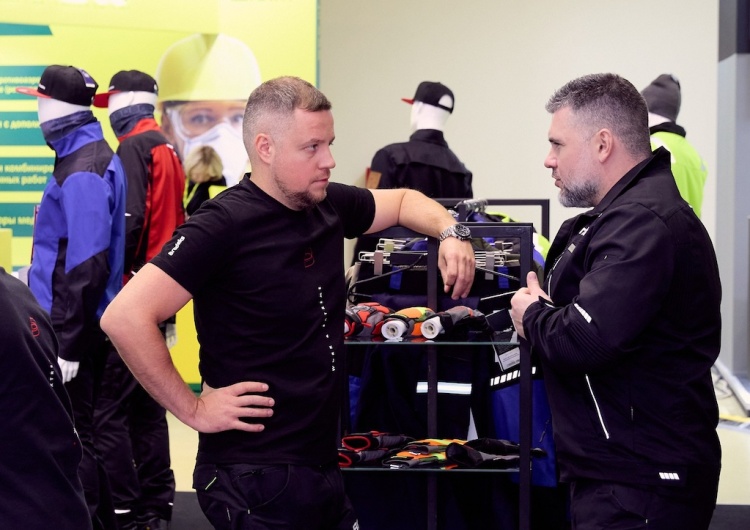
— What is Brodeks?
— Brodeks is a modern workwear brand that changes stereotypes about what workwear is, how it looks, and how comfortable, stylish, and presentable it can be.
If you meet people outside the PPE market and tell them you're in the workwear business, a fleeting look of universal despair crosses their eyes. They immediately imagine drab uniforms, endless pea coats, baggy polyester suits, rubber boots covered in mud — and all of it, of course, black. This is the common stereotype. Another stereotype is to assume that companies in this business are dull, boring, unprogressive, with management approaches from the 1950s and dinosaur founders at the helm. Brodeks breaks these perceptions. We strive to manage the company in a modern, creative way, not in an old-fashioned manner. As a result, active, modern people come to work for us, and in our team, they create a modern, stylish product. From the catalog, packaging bag, and video clip — to a specific jacket on the shelf. Out of 200 people on our team, only two or three had any prior experience in the PPE market, so our view of this market differs from the conventional one. This is what Brodeks is all about.
— In the Russian business environment, an authoritarian business management model is more popular, where the founder often interferes in the operational process and people are afraid to argue with them. You say that you try to manage the company in a modern way. What do you mean by that? What is the company's corporate culture based on?
— We can start by saying that everyone in our team uses the informal “ty” (you) when addressing each other, which is an important part of the corporate culture, enshrined in the Brodeks Employee Handbook. And we pay attention to this point. Why is it important? Because our society is already full of distancing elements. A secretary for the director, addressing managers only by their first name and patronymic, strict hierarchy – all of this is incomprehensible to us and goes against the spirit of our team. All opinions in the company are heard and taken into account, everyone has the right to make mistakes, and the founders' doors are always open to every employee. This is an absolute norm of life for us. Moreover, I don't understand how or why it could be otherwise. It only hinders the business.
“Our” people feel our atmosphere during the first interview and are drawn to the team. This is how a certain format of relationships is formed, which can be called corporate culture.
At the same time, we consider ourselves an ambitious and energetic team. As a result, people who can run fast and think even faster thrive with us.
One of the markers showing what is important to us is, for example, the fact that for 2 г now, separate waste collection has been seriously implemented in the main offices, not for show. The initiative was collective, and this project is fully supported by the employees.
— How is Brodeks connected to Veliky Novgorod, the cradle of Russian entrepreneurship and democracy?
— One of the founders of Brodeks – that's me – is from Veliky Novgorod. Perhaps my ancestors were involved in the Hanseatic League and the route 'from the Varangians to the Greeks,' and from there, through the centuries, the entrepreneurial gene was instilled in me.
I don't know for sure, but what is certain is that Veliky Novgorod is home to perhaps one of the most important departments of Brodeks – product feedback collection. Our company has a branch there, and from Novgorod, we massively call customers. Then we systematize and analyze the data. The collected information serves as the basis for the development department to discuss actions to improve the product. In this sense, every Brodeks product bears the mark of one of the oldest cities in Russia.
— Your personal VK profile is listed on your parent company AG-Technologies' website. Why did you do that?
— Every Brodeks client should have the opportunity to contact the founders directly. Feedback is a truly important element for us in creating both the product (a specific item) and the brand (a set of values), and in providing service. It's an invaluable thing that, in essence, shows us where to go and what to do. That's why we collect it both proactively (by calling end consumers) and through incoming feedback channels, which we gladly receive and examine, and then put into action. One such channel is my open VK profile. Which, by the way, is not the only direct communication channel with me. On marketplaces like OZON and Wildberries, where our products are presented, we also include flyers with my appeal and a request to share their experience of use.
— Why did you and your partner, Anton Meshkov, get into workwear?
— I've had an entrepreneurial drive since childhood. Ten years ago, we founded our own company. We had the opportunity to start by distributing the Finnish workwear brand Dimex. For the first few years, we only sold European brands and were a distribution company. Then our ambitions pushed us to create our own brand. That's how Brodeks appeared. Unlike the trading business, having our own product was like moving from a two-dimensional to a three-dimensional measurement. In the trading business, there are two unknown variables: the client and how to reach them, while the product is a constant. Our own product is the third unknown, where everything depends entirely on you. This model, on the one hand, is more complex, but on the other hand, much more interesting.
— What is AGT's turnover for 2023 гyear?
— It's no secret. About 1,3 мл billion rubles.
— Clothing from Brodeks is...?
— Clothing that is made for the person who will wear it. Not for GOST, not for a tender, and not even for the head of the procurement department.
Clients of Brodeks are those employers who equate employee happiness (satisfaction) with their commercial success. There is a direct correlation in their logical chain: my employee is happy — therefore, I am happy. High-quality workwear not only protects but also increases labor productivity and improves the atmosphere in the team — these are key components of a company's success.
— What do 'quality' and 'functionality' mean in the Brodeks canon?
— We had an open discussion within our team, which even became part of our strategic sessions: what is quality, what is functionality, what is ergonomics, what is durability from our and the client's perspective. We consulted dictionaries, looked at the original correct meanings of words, and debated.
For ourselves, we arrived at the following interpretations: functionality is what revolves around materials and production technology. For example, a breathable membrane (material) with seam sealing (production technology). The result is functional clothing that protects against getting wet and heat loss.
Ergonomics refers to the design and refinement of a product to make it comfortable to use due to its construction. For example, to prevent drafts to the lower back, to ensure a phone fits in a pocket, and that the collar doesn't press when fastened.
Durability is a high indicator of wear resistance of all components + seam treatment.
And quality is a definition that combines these three criteria. It seems to us that the end consumer thinks exactly this way, without the need to break everything down into elements.
When we eat borscht in a restaurant, it's either tasty or not tasty. A professional chef thinks for us about what kind of beetroot to use and how long to cook the potatoes. Quality, in the client's understanding, is 'tasty,' and the manufacturer's task is to break down this 'tasty' into elements and achieve a high result.
— Which companies serve as examples for you? Whose developments and innovations in the global PPE market do you follow?
— In terms of the global workwear market, we are very impressed by Scandinavian and German workwear manufacturers. Scandinavians are able to find very elegant and minimalistic solutions. Expensive, but elegant, high-quality, and precise. Germans are interesting in how they solve the issue of producing large batches of products and how they work with pricing. Increasing batches and pricing are two important elements for Brodeks. We definitely do not see ourselves as a niche brand for the elite, so both affordability and sufficient physical availability are strategically necessary for us.
— How difficult is it to sew high-quality workwear in Russia?
— I don't think it's difficult to sew high-quality clothing in Russia! Of course, it often requires extra effort to organize the process, but you can sew in Russia at the same level as even top European brands, not to mention the mid-price niche. The problem is not with quality, but with other things that are nevertheless critical. Firstly, there is a limited ability to exponentially increase production batches. There is currently a lack of both capacity and personnel for this. Secondly, as a consequence, pricing is uncompetitive with Southeast Asia. Thirdly, the territorial fragmentation of production sites across Russia, and accordingly, complex logistics for components and finished products. Fourthly, there are difficulties with implementing a number of technological solutions, such as seam sealing, for example. Fifthly, the focus of large workwear manufacturers on working with state monopolies, and as a consequence, low service for private customers. I express my sincere respect to all Russian sewing enterprises that are trying to change something for the better. Often this is a business not "thanks to," but "in spite of," which cannot but command respect.
— Why are there so few companies in the PPE market, unlike the outdoor clothing market, that purposefully build their brand?
— A characteristic feature of the Russian PPE market is a very high share of several large consumers in its total volume. As a result, very significant PPE needs are concentrated in a small number of consumer companies (Rosneft, Gazprom, Russian Railways, Gazprom Neft, large metallurgical holdings). Many PPE manufacturers see their success in establishing sustainable relationships with them. In turn, brightness, originality, creativity, and energy are not (yet) seen as an essential element for the existence of these companies. Business owners essentially face a choice: either I need to try to attract 10,000 clients who might buy five suits each, or build relationships with one or two employees whose companies buy 50,000 suits. The first path implies building a strong brand, competing for audience attention, and focusing on service to retain that audience. One of the reasons for the “dullness” of the PPE market in Russia is that the absolute majority of companies try to follow the second path. And this path itself does not imply brightness, openness, or any bold decisions. Now, competition in the PPE market is increasing, which means the rule will apply: “Differentiate or die.” In the Russian outdoor clothing market, there are no large buyers, and there is a strong struggle for the end consumer. Companies engage in marketing, PR, work on brand recognition, and broadcasting their values to stand out.
— One of the big problems for Russian businesses in the PPE sector is organizing the product development and R&D process. How does Brodeks solve this?
— Almost from the very beginning, we decided that we would fundamentally not copy, but develop our products from scratch. It's hard to explain it rationally, but I believe that for a brand to develop, it needs the energy of its founders, team, sales, and media partners. Copying can bring good profits in the short term, but it completely deprives the idea of one's own brand of energy. Therefore, at some point, we freed up one of our premises from sales managers, sent them 'into the field,' and began purchasing equipment, gradually 'populating' this space with designers, constructors, and technologists. Our development queue never drops below five new products, and sometimes the list of ideas and plans includes 10-20 м models. A huge number of processes in the company revolve around R&D, and I am a direct participant in most of them, along with my colleagues.
— What PPE and footwear does Brodeks offer?
— All last year, active development of protective footwear and gloves was underway. I hope that these lines will be in our warehouses in Russia in the second half of 2024. We will definitely make an announcement. We do not plan to go into other types of PPE yet.
— What new trends do you see in the PPE market?
— I see one big trend that is global and much broader than the PPE market. It is that every year fewer people want to work in the real sector — construction, manufacturing, agriculture. In Russia, in particular, competition for people has grown phenomenally in recent years.
— What elements of employee retention and attraction remain besides the financial component?
— First, treat people normally. Just normally, with basic respect. People appreciate that. Second, provide normal working conditions, from clean toilets to good tools, workwear, and PPE. Third, provide social guarantees: retraining, voluntary health insurance, and so on. In this regard, the PPE market is only a small part of a global trend. If a company wants to remain competitive, it must address these issues. Comfortable and attractive workwear, in which any employee feels like a capital-H Human, is a small but integral part of the competition for personnel.
— How important is price for the Russian consumer?
— There are two types of consumers: those for whom price is important, and those for whom both price and what they get for it are important. In our field of activity, the second type of companies predominates, with whom we find common ground. For our clients, product quality and service are a priority.
— What are Brodeks's criteria when choosing a new distributor?
— We choose, and we are chosen! A partnership agreement is a mutual process. Two criteria are primarily important to us. The first is the presence of energy in the company. Our partners should not only want to earn money — it's important that they are interested in working with us. The second is what is called a “positive mindset”. Our partners are people with a positive outlook on things, optimists, just like us. With such people, we easily find common ground and mutual understanding on a human level. If we talk strictly about business, active companies are motivated to study and promote a new brand for them, which is necessary for successful cooperation.
— Brodeks actively and creatively collaborates with Russian DIY bloggers in promotion. How do you assess the effectiveness of such cooperation? What is necessary for the successful use of this promotion channel?
— I think that 99%% of the success of collaborations with opinion leaders depends on the product. Essentially, the only capital bloggers have is social capital, so it's extremely important for them to work with a brand that, firstly, won't let them down in front of their audience, and secondly, can create a synergy effect with them and increase this social capital. Many opinion leaders consider us the brightest brand in the Russian workwear market. They are generally impressed by our approach and want to be involved in what we do. For us, this collaboration offers a dual benefit. In addition to increased brand awareness, we receive invaluable feedback from media professionals from various industries. Everyone has a huge wardrobe of top workwear from different global brands, and many are deeply invested in its functionality and comfort. Therefore, for our development team, working with such individuals with very high expectations is a kind of test. When starting to work with DIY bloggers, you must be 150%% confident in your product. For us, collaborating with media personalities who create things with their own hands is an important part of brand promotion. This year, we created a dedicated department for this area and plan to establish interaction with most DIY bloggers in Russia within a year or two.
— You first visited China in 2023 г. What surprised you most about Chinese entrepreneurs and their business approaches? What interesting insights did you gain regarding production organization?
— There were so many impressions that during the day I held meetings at factories, and at night I sat down to write conclusions and presentations of ideas for the team, so as not to miss anything. First of all, I was shocked by the speed of response to requests for meetings and negotiations. I remember sending an email late on a Friday evening (local time) and receiving a reply within 30 м minutes personally from the CEO of a company with a turnover of several tens of millions of dollars. People who work with our manufacturing enterprises will understand my surprise! The second shock was, perhaps, the depth of understanding of the product and market among some local manufacturers. In China, I stereotypically expected to see, so to speak, “just hands,” but in fact, both the availability and quality of “brains” turned out to be very good there. And the third discovery is that China itself no longer sees itself as a production site for a wide range of products. People, just like in Russia, are reluctant to work in factories, and in the near future, mainly the most technologically advanced sewing productions will remain in China, while the mass segment will finally migrate to other countries, such as Bangladesh, Burma, Cambodia, Laos.
— China — a threat or an opportunity for the Russian PPE market?
— I do not view China as a threat. In my worldview, our main customer, beneficiary, and decision-maker is the end-user of the product. The more competitive the environment in the country, the more they benefit. Higher competition means better products and lower prices. Lower competition means worse products and higher prices. If we talk about a direct intervention of Chinese factories into Russia with their private labels, I don't see how that could physically happen. Our market does not have such significant weight for large Chinese workwear manufacturers. On average, the share of deliveries to Russia is no more than 1-3% of their revenue. Therefore, it is much more profitable and understandable for them to build relationships with local Russian brands, developing products with their deep understanding of the Russian PPE market in mind. From such cooperation, I only see benefits for all participants.
— Has Brodeks already become an international brand?
— Currently, in addition to Russia, we work with partners from Kazakhstan, Belarus, and Armenia. There is a partner in the UAE. For the next few years, the development focus will be on our country and the CIS states. After all, this is the closest and most understandable market for us. If we talk about the long-term perspective, we certainly dream of the brand becoming widely represented in the world. For now, in the current conditions, this sounds like a difficult task to implement, but regarding the development of Brodeks, we think like long-distance runners and move towards the goal gradually. Only the first kilometer is behind us, many difficulties lie ahead — and opportunities too. We believe that the Brodeks brand will be global.
— Is a hoodie workwear?
— In Europe, for a certain category of consumers, a hoodie has already become an element of professional equipment. There are even flame-resistant options. I hope that soon in Russia, we will not only be able to talk about this but also show on real products what it can look like. For the second year, we have been working on a solution that would be both wear-resistant and stylishly casual at the same time. We expect to present it soon. Brodeks takes a broad view of the market. A lot is changing now. For example, one of our wild ideas — a kilt as workwear — initially looked like a joke, but suddenly aroused interest among young creative employees of car service centers.
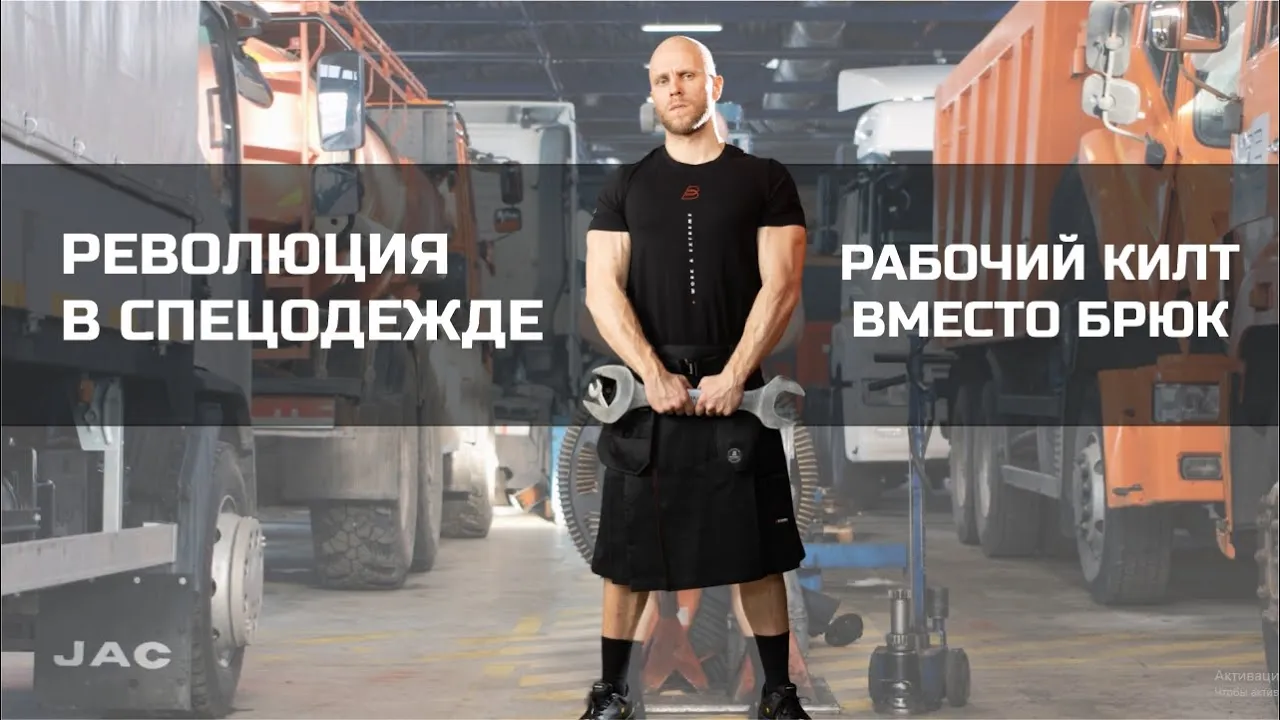
It should not be forgotten that original workwear for young employees is an expression of inner freedom and individuality. In the USA, a welder can work in a mask with dragons, and a builder in a hard hat with the logo of his favorite football team, the New York Jets. Why not let an employee express himself in this way if he feels more comfortable? He will also work more efficiently.
— Which colleagues in the market do you communicate with?
— We communicate warmly and openly with representatives of many companies in the industry. I can specifically highlight the always productive, pleasant, and rich communication with Getsiz and, in particular, with Evgeny Shuvalov. The presence of such bright passionaries and communicators is a rather paradoxical story for our conservative PPE industry, which at the same time definitely develops it and moves it forward.
— Are collaborations between companies for joint product/service releases possible in the Russian PPE market?
— A necessary attribute of collaboration must be the presence of two strong brands. Not companies, but brands! Preferably with somewhat different products. The Russian PPE market is represented by strong manufacturing and trading companies. Unfortunately, there are still few bright and strong brands. Unlike, by the way, the Russian outdoor clothing market: things are much better there. Therefore, I don't see much ground for bright collaborations within the PPE industry. But that's for now.
— Give three pieces of advice to young entrepreneurs working in the PPE market.
— I've been in business for just over 10 л years, so I consider myself a young entrepreneur. Accordingly, my three pieces of advice are for beginners. First. When looking for interesting cases, don't look at the PPE market! Our industry is conservative, and the freshest practices are in other industries that are several steps ahead of ours. For example, compare the user experience when ordering a product on Ozon and in any PPE b2b company. Buying something in the b2b market is still time, pain, torment, and suffering. Our growth points lie precisely in this lag behind other industries. Second. Understand IT and invest in automation and minimizing the human factor. In one large retail chain, about three years ago, the job description for a merchandiser consisted of 8 (!) pictures (!). We will all soon come to this as well. Third. Work honestly. A given kickback will bring revenue today, but it will not provide an incentive for development. As a result, stagnation and the death of the company tomorrow.
— Where and how do you draw inspiration and energy necessary for business development?
— For me, it's very simple. Entrepreneurship, and product creation in particular, is what truly interests me and what I live for. It's more something that gives me energy for other aspects of life, rather than taking it away. We make a product that benefits people, and I have a circle of like-minded individuals around me who share the same ideas. This, in essence, is the source of inspiration and energy.
Link to the original article - https://getsiz.ru/gleb-yakovlev-my-verim-chto-Brodeks-stanet-mirovym-brendom.html
Learn more about new products and brand life